Global Soccer Security: What Kansas City Businesses Need to Know
- Insider,
- Kansas City,
- Events
Kansas City security is becoming a critical priority as the city is preparing for a moment that will put the city on a global stage.
As a host city for the 2026 world soccer event, the region will see an influx of hundreds of thousands of visitors, increased activity across entertainment districts, and extended operating hours for many businesses. For local organizations, this represents a major opportunity—but also a shift in risk.
During events of this scale, normal patterns don’t apply.
Crowds move unpredictably. Activity extends well beyond stadium boundaries. And the areas surrounding businesses—parking lots, storefronts, and adjacent properties—become part of the event footprint.
Kansas City businesses will feel the impact of the soccer event, and what will matter most is how prepared they are for everything it brings.
When Crowd Dynamics Change the Rules
Major events bring more people, but they also introduce new patterns of movement and behavior that businesses don’t typically encounter:
- Foot traffic increases in both expected and unexpected areas.
- Visitors unfamiliar with the city move through commercial zones at all hours.
- Public spaces, private property, and business perimeters begin to overlap.
- At the same time, law enforcement resources are stretched.
Local planning conversations indicate that public agencies will be heavily committed to core event operations, leaving a significant portion of broader security needs to be managed elsewhere.
That creates a gap—not because of poor planning, but as a natural result of the scale involved—and it’s within that gap that businesses become more exposed.
Where Businesses Are Most Vulnerable
For many organizations, the highest risk won’t be inside their buildings. It will be around them.
Common areas of exposure include:
- Parking lots and garages
- Outdoor inventory or storage areas
- Entry points and access routes
- Adjacent sidewalks and shared spaces
These areas are harder to control during normal conditions. During a large-scale event, they become even more difficult to manage.
For example:
- Auto dealerships may see increased foot traffic across lots after hours.
- Hotels and hospitality venues may deal with overflow gatherings or unauthorized parking.
- Retail and entertainment districts may experience loitering, vandalism, or opportunistic theft.
- Commercial properties may see increased use of vacant or low-traffic areas.
Without consistent oversight, small issues can escalate quickly.
Why Traditional Security Approaches Fall Short
Many businesses rely on a combination of cameras, alarms, and occasional patrols.
Those tools still have value, but on their own, they don’t scale well during high-density events because:
- Cameras may record activity but don’t intervene.
- Alarms may trigger but require follow-up.
- Patrols may respond—but only after time has passed.
During an event of this scale, that delay matters.
When activity is constant and unpredictable, response time becomes the difference between a controlled situation and a costly incident, and coordination is just as important as coverage.
A Proactive Approach to Event Security
The most effective way to prepare for an event of this scale is through a layered, proactive approach.
Rather than relying on a single method, businesses are increasingly combining:
- Real-time video monitoring
- Virtual security guards
- Mobile patrol services
- Drone-based aerial response
Together, these elements create a system that detects, verifies, and responds to activity as it happens.
This approach aligns with the broader shift toward proactive security that identifies risks early and addresses them before they escalate.
How a Layered Security Model Works
A layered security model is designed to maintain control across both physical space and time.
- Monitoring provides continuous visibility across the property, identifying unusual activity in real time.
- Virtual security guards add human oversight, verifying alerts and intervening immediately when necessary.
- Patrol services provide on-the-ground response, reinforcing presence and addressing incidents directly.
- Drone response extends coverage across large or hard-to-reach areas, allowing rapid verification and situational awareness.
Each layer supports the others. Instead of isolated tools, the system operates as a coordinated response network.
Why Timing Matters
As this large world event approaches, demand for security services will increase. Staffing, planning, and deployment timelines will become tighter. Businesses that wait too long may find fewer options available, or limited flexibility in how coverage is structured.
Preparation now allows for:
- Proper site assessment
- Customized security planning
- Scalable deployment based on expected traffic
- Coordination with existing operations
Rather than overcorrecting later, it’s important to prepare intelligently now.
The Role of Private Security During this Event
Public safety agencies will play a critical role during the event, but they will also be focused on core event zones, transportation infrastructure, and large-scale crowd management.
That leaves private businesses responsible for their own environments. This is where private security becomes not a replacement for law enforcement, but a complementary layer that protects business operations directly.
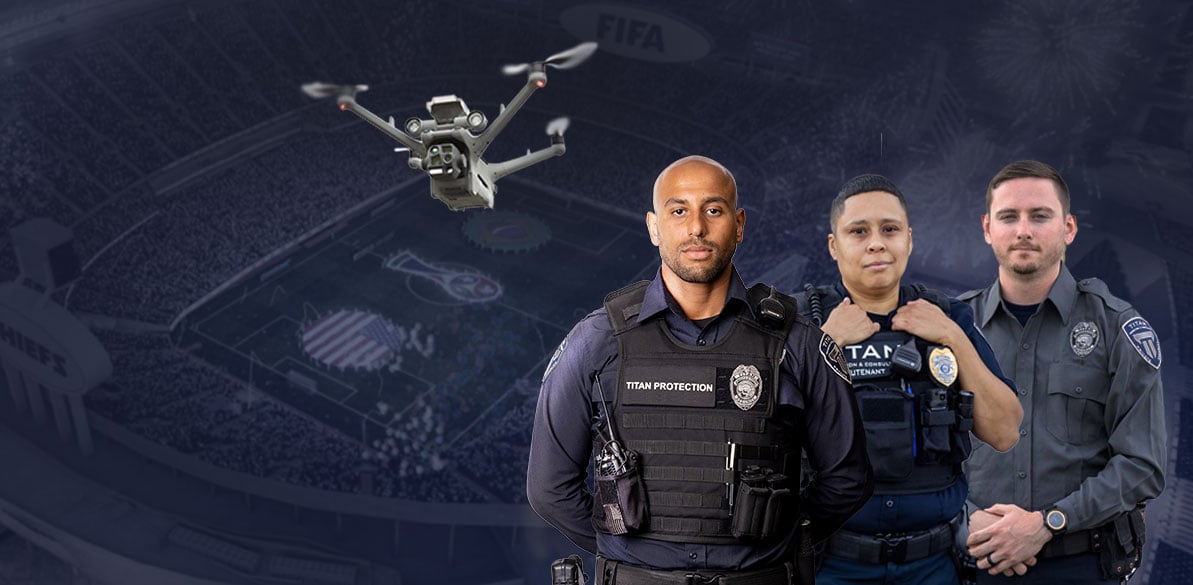
Titan Protection’s approach is built around that role. By providing real-time monitoring, on-site presence, and rapid response capabilities, Titan helps businesses maintain control even as activity around them increases.
What Prepared Businesses Are Doing Now
Across Kansas City, organizations preparing for this event are taking practical steps:
- Evaluating current security coverage and identifying gaps
- Expanding monitoring into parking and perimeter areas
- Planning for extended hours and increased traffic
- Adding flexible response capabilities
- Ensuring communication protocols are clear and reliable
These actions require alignment, not a complete overhaul. The goal is to ensure that security keeps pace with the environment.
Protecting Operations During a Global Event
This global soccer event brings visibility, opportunity, and energy to Kansas City. But it also brings complexity.
For businesses, maintaining normal operations during that period requires more than reacting to issues as they arise. It requires anticipating how conditions will change and preparing accordingly.
Security plays a central role in that preparation.
When systems are coordinated, response is immediate, and coverage is consistent, businesses can operate with confidence—even during peak demand.
Preparing Now Means Operating Smoothly Later
The window to prepare is open, but it won’t stay that way for long. As the event approaches, the difference between prepared and unprepared businesses will become clear.
Those with proactive security strategies will maintain control of their environments. Those without may find themselves reacting to situations they could have prevented.
Prepare Your Business Before the Crowds Arrive
If your business is preparing for increased traffic, extended hours, or heightened exposure during the soccer event, Titan Protection can help you build a security plan tailored to your property and operations.
Connect with Titan’s Kansas City team to assess your current setup and ensure you’re ready before the crowds arrive.
Subscribe To Email Update
Posts by Topic
- Video Monitoring
- Drone Security
- Virtual Guard
- Auto Dealership Security
- Construction Site Security
- News
- Blended Security
- Press Release
- Commercial Property Security
- Parking Lot Security
- Kansas City
- Cannabis Dispensary Security
- Events
- Hospital Security
- Insider
- St. Louis Security
- Campus Security
- Critical Facility Security
- Data Center Security
- Farm Protection
- Farm Security
- St Louis