Security Footage Isn’t Prevention Without Real-Time Action
- Video Monitoring
Real-time monitoring is the essential bridge between simple visibility and true crime prevention for modern facilities. Most facilities have cameras; however, many still deal with after-hours trespassing, vandalism, and theft because visibility alone doesn’t prevent incidents and action does.
Most facilities have cameras. However, many still deal with after-hours trespassing, vandalism, and theft. That disconnect frustrates facilities directors because it feels like the basics are already covered. Despite footage, alerts, and proof after the fact, losses continue to occur.
This is because visibility alone doesn’t prevent incidents. Action does. Without real-time monitoring and clear escalation routines, cameras become passive witnesses instead of active protection.
Passive Footage vs. Active Security
Traditional CCTV systems are designed to document events, not stop them. They record movement, capture images, and store evidence. But they don’t intervene.
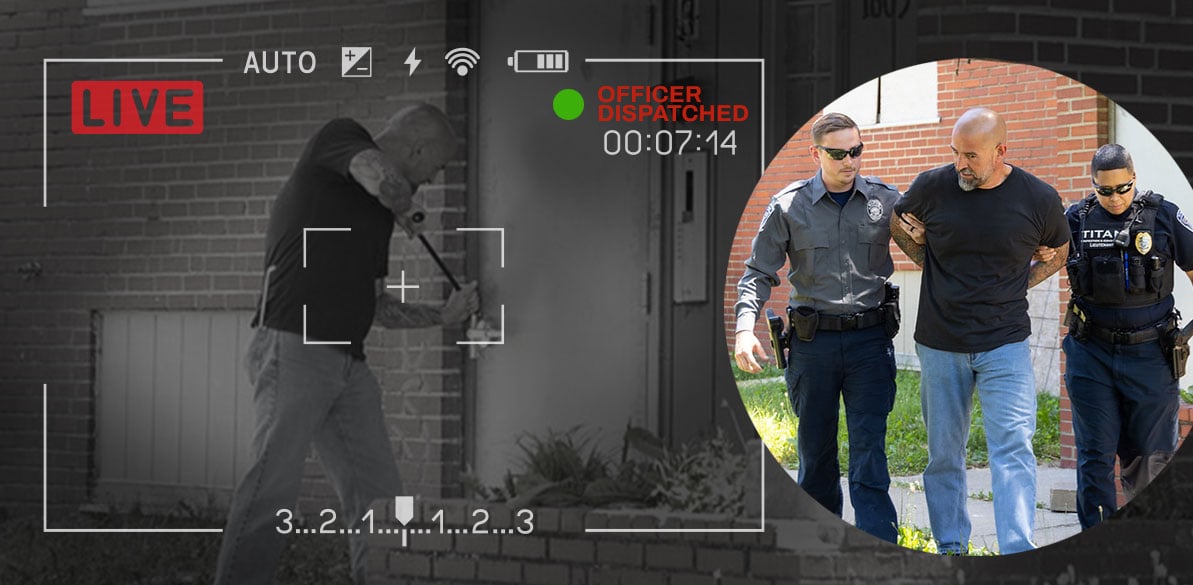
When an after-hours intruder enters a property, a passive system usually follows this path:
- Motion triggers an alert
- Footage is reviewed later
- Damage or theft is already done
At best, that footage helps with insurance claims. It rarely changes outcomes. Active security flips that model. Instead of asking “What happened?” the system asks, “What’s happening right now, and what should we do about it?” That shift is what separates recording from prevention.
What Real-Time Monitoring Actually Means
Real-time monitoring goes beyond just “better” cameras or “smarter” motion detection with continuous human oversight paired with technology.
At Titan Protection, real-time monitoring means:
- Live feeds actively watched by trained operators
- AI-assisted alerts that surface suspicious behavior
- Immediate verification instead of delayed review
- Operators empowered to take action—not just observe
This happens inside Titan’s 24/7 command center, where monitoring teams don’t wait for incidents to finish before responding. They assess situations as they unfold and follow defined response protocols. That human layer is what transforms surveillance into security.
Escalation & Response Routines: Where Prevention Happens
Monitoring only works if there’s a clear plan for what happens next. Escalation and response routines define how an alert moves from detection to resolution. Without them, alerts pile up and nothing changes.
A typical actionable routine looks like this:
- Detection: Motion or behavior triggers an alert
- Verification: A live operator immediately assesses the situation
- Intervention: Audible warnings, lighting activation, or voice-downs are deployed
- Dispatch: Patrol services or authorities are contacted if the threat continues
- Resolution & Reporting: The incident is documented and reviewed
Speed matters. Intervention within seconds or minutes often stops intruders before damage occurs, because waiting until the next morning guarantees loss.
How Titan Turns Visibility Into Action
Titan Protection’s security model is built specifically to close the gap between seeing and stopping.
Remote Real-Time Video Monitoring
Titan’s monitoring services ensure every alert is reviewed by a live professional in real time, rather than hours later. Operators recognize early behaviors like loitering, perimeter testing, or repeated movement patterns and act before those behaviors escalate.
Virtual Security Guard Services
Virtual guards add mobile, deployable deterrence. By using audio warnings, lighting, and visible presence, operators interrupt intruders directly, often ending incidents without dispatching patrols at all.
Both services operate under clear escalation protocols, ensuring alerts don’t stall or get ignored. Someone is always responsible for the next step.
After-Hours Scenarios That Don’t Have to Become Losses
Facilities directors see the same patterns repeatedly: trespassers entering automotive lots late at night, vandals targeting parking areas or loading zones, and individuals testing doors, gates, or service areas.
With passive systems, these incidents show up as footage the next day. However, with active monitoring:
- Suspicious movement is identified early
- Verbal deterrence is issued immediately
- Patrols are dispatched only when needed
- Intruders leave before damage occurs
It’s the response, not the camera, that makes the difference.
Why Actionable Security Matters to Facilities Directors
Facilities leaders are measured on outcomes, not equipment. Actionable monitoring delivers:
- Reduced after-hours losses
- Faster response times
- Fewer false alarms
- Lower insurance risk
- Less operational disruption
It also provides confidence. Instead of hoping alerts are reviewed in time, facilities directors know someone is actively watching and ready to act.
Best Practices for Turning Cameras into Prevention
If your facility still experiences loss despite camera coverage, the solution isn’t buying more hardware. You just need better execution.
Strong prevention starts with:
- Integrating cameras into a monitored environment
- Defining clear escalation and response protocols
- Using trained operators, not automated alerts alone
- Deploying virtual guard capabilities where risk is highest
Security works best when responsibility is clear and response is immediate.
Elevating From Passive Documentation to Real-Time Monitoring Action
Cameras will always have value, but only when paired with real-time monitoring and decisive action. Titan Protection’s remote video monitoring and virtual security guard services are designed to do exactly that: turn visibility into immediate response and prevention.
If after-hours intrusion or trespassing remains a concern, it’s time to move beyond recording incidents and start stopping them.
Explore Titan’s Remote Video Monitoring and Virtual Security Guard services to see how actionable security works in practice.
Frequently Asked Questions
Why don’t security cameras alone prevent after-hours intrusions?
Security cameras document what happens, but they don’t stop it on their own. Without someone actively monitoring the footage and responding in real time, trespassers have time to move through a property, cause damage, or commit theft before anyone intervenes. Prevention requires immediate human action rather than a next-day review.
What happens when suspicious activity is detected after hours?
When activity is detected, Titan’s monitoring team verifies the situation immediately through live video. If behavior looks suspicious, operators initiate deterrence using voice-downs, lighting, or audible warnings. If the threat continues, escalation protocols guide next steps, including dispatching patrol services or notifying authorities. Every alert follows a defined, time-sensitive response process.
How is video monitoring different from traditional security guards?
Traditional guards are limited by where they can physically be at any moment. Video monitoring provides continuous oversight across large areas, multiple zones, and blind spots simultaneously. Titan’s approach combines trained operators, analytics, and escalation routines to deliver consistent coverage—often at a lower cost and with faster intervention than guard-only models.
Can video monitoring reduce false alarms at my facility?
Yes. Live verification allows operators to quickly determine whether an alert represents a real threat or normal activity. This reduces unnecessary dispatches, minimizes disruptions, and ensures responses are reserved for legitimate incidents rather than alarm fatigue.
Is remote video monitoring effective for automotive and outdoor facilities?
Absolutely. Titan specializes in securing large, open environments such as automotive lots and outdoor facilities. Integrated lighting, live monitoring, and rapid deterrence make it possible to detect and interrupt after-hours activity before it turns into loss—even in expansive or low-traffic areas.
Subscribe To Email Update
Posts by Topic
- Video Monitoring
- Drone Security
- Virtual Guard
- Construction Site Security
- Auto Dealership Security
- Blended Security
- News
- Press Release
- In The News
- Commercial Property Security
- Kansas City
- Parking Lot Security
- Events
- Farm Protection
- Farm Security
- St Louis
- St. Louis Security
- Cannabis Dispensary Security
- Critical Facility Security
- Hospital Security
- Insider
- Campus Security
- Data Center Security
- Solar Farm Security