Closing Blind Spots as Solar Sites Take Shape
- Video Monitoring,
- Construction Site Security,
- Virtual Guard,
- Drone Security
Solar construction projects rarely look the same from one month to the next.
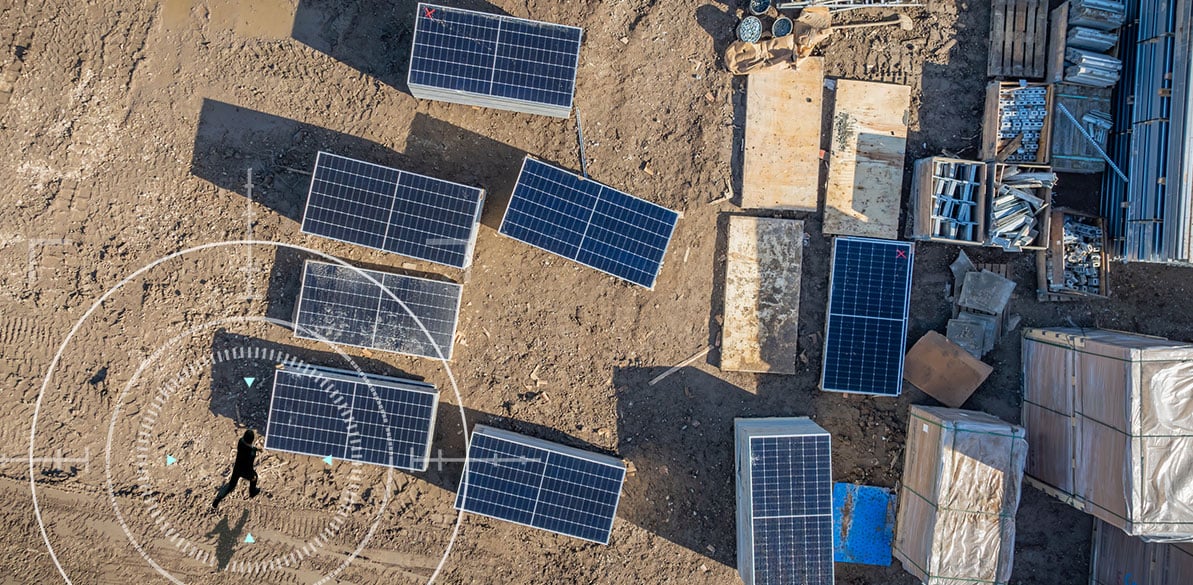
A site that begins as cleared land gradually fills with access roads, staging areas, equipment, electrical infrastructure, and thousands of solar panels. As work progresses, crews relocate, deliveries shift, and the areas that require the most protection continue to change.
Security should change with them.
One of the biggest challenges on large solar projects is keeping security effective as the site evolves. Cameras that provided excellent visibility during site preparation may become obstructed by new structures. Equipment yards move, new entrances are opened, and areas that once represented the greatest risk become fully developed while new vulnerabilities emerge elsewhere.
Without adapting alongside the project, security systems gradually develop blind spots that create opportunities for theft, vandalism, and project delays.
Why Fixed Security Becomes Less Effective
Construction sites are temporary by nature. Unlike a completed commercial building, a solar project changes almost every day, with materials arriving in phases, heavy equipment moving across the property, and temporary fencing being relocated.
In fact, entire work zones may shift as construction advances. Those changes affect security in several ways:
- Solar arrays block existing camera views.
- Equipment staging areas relocate.
- New access roads create additional entry points.
- Perimeter fencing changes as construction expands.
- Valuable materials move to different parts of the site.
None of these changes indicate a problem with the security system itself. They simply mean the site has outgrown yesterday's security layout.
Risk Changes Throughout the Project
Security priorities don't remain constant from groundbreaking to commissioning.
- During site preparation, contractors may focus on protecting heavy equipment and fuel storage.
- As construction progresses, theft targets shift toward copper wire, transformers, electrical components, and photovoltaic panels.
- Later in the project, completed infrastructure, testing equipment, and finished installations become the highest-value assets.
Each phase introduces new risks, which means security planning should evolve alongside construction schedules rather than remain fixed from day one.
Building Security Around the Site You Have Today
Selecting the right security approach starts with understanding how the project operates today—not how it looked when construction began.
Project teams should evaluate factors such as:
- Current work zones
- Equipment staging locations
- Temporary access roads
- Cellular and power availability
- Overnight activity levels
- Areas with limited visibility
- Escalation and response procedures
These assessments should become part of regular project reviews, allowing security coverage to evolve alongside construction.
What Adaptable Monitoring Means
Adaptable monitoring is exactly what it sounds like: security designed to move with the project. Rather than treating cameras and monitoring equipment as permanent fixtures, adaptable systems can be repositioned as work progresses, ensuring the highest-risk areas remain under observation.
By combining flexible equipment placement with centralized oversight, security teams maintain visibility even as the site changes around them. This adaptability, especially on large construction projects, is an important element of maintaining effective security.
Maintaining Visibility as Construction Progresses
With video monitoring services, cameras can be strategically relocated as construction advances, helping maintain coverage of evolving work areas rather than remaining fixed in locations that no longer provide the best visibility.
Because trained operators monitor activity in real time, suspicious behavior can be identified while it's occurring instead of being discovered during the next day's review. This combination of flexible placement and continuous oversight helps maintain consistent visibility throughout the life of the project.
Virtual Security Guards Provide Consistent Oversight
As a solar project expands, maintaining consistent oversight becomes more challenging. Monitoring systems need to adapt so visibility remains strong from one phase of construction to the next.
Virtual Security Guards provide centralized oversight regardless of how the construction site changes. Operators review live activity, verify alerts, and determine whether escalation is necessary.
As work areas expand or shift, monitoring priorities can change without requiring a complete redesign of the security program. This flexibility allows project teams to maintain awareness across the entire site rather than focusing only on fixed locations.
Drone Security Extends Visibility
Some areas simply can't be monitored effectively from a stationary position. Large solar installations often contain long perimeter boundaries, remote equipment yards, and temporary work zones that are difficult to observe continuously.
Drone security provides an aerial perspective that complements ground-based monitoring. When suspicious activity is detected—or when operators need additional visibility—drones can quickly verify conditions, inspect remote areas, and provide real-time information without waiting for personnel to reach the location.
As construction progresses and blind spots change, drones provide another layer of flexibility that static systems alone cannot.
Security Planning Should Evolve With Construction
Even after groundbreaking, schedules are updated, logistics change, and crew move from one phase to the next.
Because construction planning doesn't stop, neither should your security planning. Regular reviews should include:
- Whether camera locations still provide effective coverage
- Changes to access points or perimeter fencing
- Movement of high-value equipment and materials
- New areas requiring additional monitoring
- Response procedures for changing site conditions
Making these evaluations part of routine project management helps reduce the likelihood that new blind spots develop unnoticed.
Better Visibility Supports Better Project Outcomes
Reducing theft is an important goal, but it's not the only benefit of adaptable monitoring. Maintaining visibility throughout construction also helps:
- Reduce project interruptions
- Protect delivery schedules
- Improve coordination across the site
- Increase awareness of changing conditions
- Support smoother project execution
When project teams have a clearer understanding of what's happening across the property, they're better positioned to keep work moving forward.
Why Titan Protection
Solar construction projects demand security that can adapt as quickly as the site itself. Titan Protection combines live video monitoring, Virtual Security Guards, and drone security into a flexible program designed for evolving construction environments.
Rather than relying on a static security layout, Titan helps project teams maintain visibility as work progresses, new risks emerge, and priorities change. This results in continuous awareness from site preparation through project completion.
Keep Blind Spots From Slowing Down Your Project
Construction sites change every week, and security should keep pace with those changes. By reviewing coverage regularly and adapting monitoring to match the current phase of construction, project teams can reduce vulnerabilities before they become costly delays.
Protect your solar construction site before blind spots become project setbacks. Contact Titan Protection to schedule a security assessment and build a monitoring plan that evolves with every phase of construction.
Frequently Asked Questions about Solar Construction Security
Why do construction cameras lose effectiveness over time?
As work progresses, changing layouts, new structures, and relocated equipment can block views or shift risk to areas that are no longer covered.
How often should construction site security be reviewed?
Security should be evaluated regularly throughout the project, particularly when work zones, access points, or material staging areas change.
What makes solar construction projects different from other jobsites?
Solar projects typically cover large areas, evolve in distinct phases, and involve changing layouts that require flexible security coverage.
How do drones improve solar construction security?
Drones provide rapid aerial visibility across large or difficult-to-monitor areas, helping verify suspicious activity and inspect locations that fixed cameras cannot easily cover.
Can monitoring systems move as construction progresses?
Yes. Adaptable monitoring systems can be repositioned to maintain visibility as the site evolves, helping reduce blind spots throughout the construction lifecycle
Subscribe To Email Update
Posts by Topic
- Video Monitoring
- Drone Security
- Virtual Guard
- Construction Site Security
- Auto Dealership Security
- Blended Security
- News
- Press Release
- In The News
- Commercial Property Security
- Kansas City
- Parking Lot Security
- Events
- Farm Protection
- Farm Security
- St Louis
- St. Louis Security
- Cannabis Dispensary Security
- Critical Facility Security
- Hospital Security
- Insider
- Campus Security
- Data Center Security
- Solar Farm Security