Stopping Copper and Component Theft on Solar Farms
- Video Monitoring,
- Virtual Guard,
- Drone Security,
- Solar Farm Security
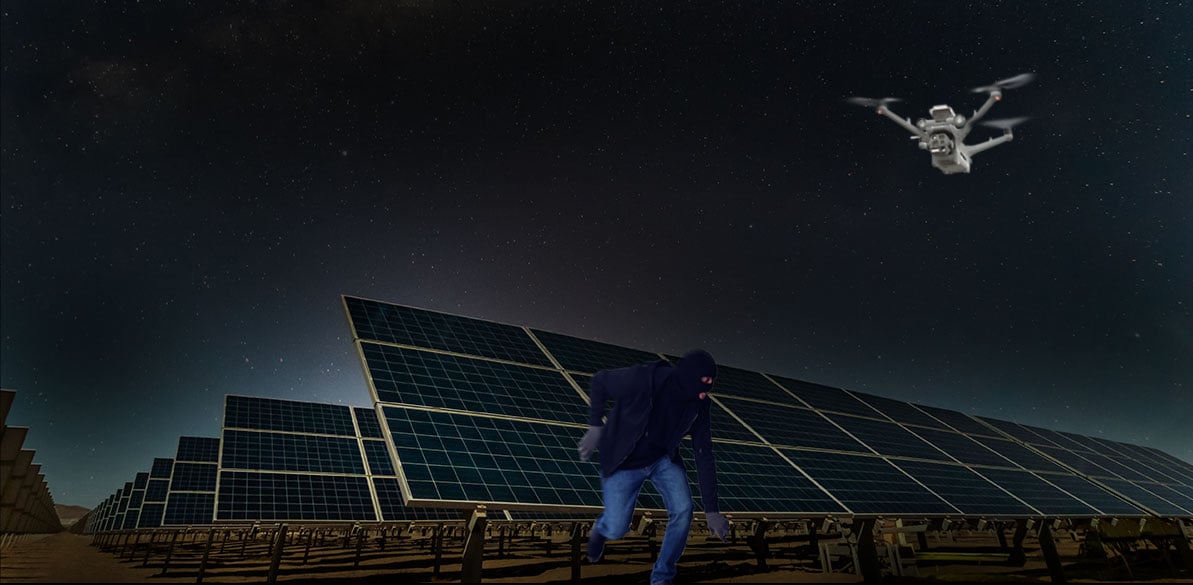
Solar farms are built to generate reliable power over decades, but they also contain valuable infrastructure that attracts thieves.
Copper cable, electrical components, transformers, and other equipment keep solar facilities generating power and delivering electricity to the grid. They also have significant resale value, making solar facilities frequent targets for theft-particularly those located in remote areas with long perimeters and limited overnight activity.
The financial impact extends well beyond the value of the stolen material. A single incident can interrupt power generation, trigger emergency repairs, increase maintenance costs, and delay scheduled work.
Protecting these assets means catching suspicious activity early enough to do something about it, not simply reviewing camera footage after a theft has already disrupted operations.
What Are Solar Farm Security Systems?
Solar farm security systems are designed to protect both physical infrastructure and ongoing operations.
Depending on the site's size and requirements, they may include:
- Live video monitoring
- Mobile surveillance units
- Virtual Security Guards
- Drone security
- Remote alarm verification
- Access control
- Centralized monitoring
These systems work together to maintain visibility across substations, inverter pads, cable runs, equipment yards, and perimeter areas. As facilities expand or maintenance priorities change, security coverage should evolve with them.
Why Solar Facilities Attract Theft
Solar sites present several characteristics that make them attractive to criminals. They often contain:
- Large quantities of exposed copper wiring
- Valuable electrical components
- Long perimeter boundaries
- Remote locations with limited overnight activity
Because these facilities operate over expansive areas, unauthorized access may go unnoticed if security relies solely on passive surveillance. Sites that experience one successful theft may also face repeat attempts if vulnerabilities remain unaddressed.
Copper Theft Creates Operational Problems
Replacing stolen copper is only one part of the recovery process. The larger challenge is restoring operations. Depending on the extent of the damage, theft can result in:
Temporary loss of power generation
- Emergency repair work
- Increased labor costs
- Delayed maintenance schedules
- Insurance claims
- Lost production revenue
The impact of a theft often extends beyond the missing materials. Before equipment can be placed back into service, crews may need to inspect affected systems, make repairs, and verify everything is operating safely. Those additional steps can create downtime that rivals the cost of the theft itself.
Why Recording an Incident Isn't the Same as Preventing One
Many facilities already have cameras installed. But is someone actively watching them?
Passive surveillance records events that can be reviewed later, which may help during investigations or insurance claims. However, by the time footage is examined, the theft has already occurred and operations may already be affected.
Active surveillance changes that timeline because ather than documenting what happened overnight, trained operators monitor activity in real time. This allows suspicious behavior to be evaluated while it is still developing.
Continuous Monitoring Helps Detect Threats Earlier
With Titan's video monitoring services, security personnel maintain visibility across key areas of the site throughout the day and night.
Operators monitor locations such as:
- Cable storage areas
- Inverter pads
- Substations
- Equipment yards
- Perimeter access points
Supported by intelligent analytics, they can identify unusual activity quickly and determine whether additional action is necessary. Earlier detection provides a greater opportunity to intervene before equipment is removed or damaged.
Virtual Security Guards Verify What Matters
Large solar facilities generate constant activity from weather, wildlife, maintenance crews, and authorized contractors.
Not every alert represents a genuine security threat.
Titan's Virtual Security Guards review events as they occur, distinguishing normal activity from situations that require escalation. This verification process improves response accuracy while reducing unnecessary dispatches.
When intervention is needed, operators can issue live audio warnings and coordinate with the appropriate responders based on the situation. Combining oversight and verification helps maintain consistent protection across large, remote facilities.
Drone Security Extends Visibility
Fixed cameras cannot see every part of a large solar installation. Long cable runs, changing terrain, and remote perimeter areas can all limit visibility from stationary equipment.
Drone security provides another perspective.
When suspicious activity is detected, drones can get eyes on the area quickly, giving operators a live aerial view before personnel reach the site. On large properties, that added perspective helps teams understand what's happening faster and respond with better information.
Building a Stronger Defense Against Repeat Theft
The most effective solar security programs combine multiple capabilities rather than relying on a single technology.
For example, monitoring operators may detect suspicious movement near a cable storage area and review nearby camera feeds to assess the situation. If additional visibility is needed, a drone can quickly inspect the area and provide a broader view of what's happening. Throughout the process, Virtual Security Guards evaluate the activity, coordinate communication, and initiate the appropriate response.
This strategy helps identify potential theft earlier and reduces the likelihood that the same vulnerabilities will be exploited repeatedly.
Better Security Supports Better Operations
Protecting solar assets helps support the broader performance of the facility. A proactive security program can contribute to:
- Reduced equipment loss
- Greater system uptime
- Lower emergency repair costs
- Better visibility across the site
- Reduced operational risk
By limiting disruptions, operations and maintenance teams can focus more attention on maintaining production and less on recovering from preventable incidents.
Why Solar Operators Partner With Titan Protection
Titan Protection helps safeguard large outdoor facilities through a coordinated approach that combines live video monitoring, Virtual Security Guards, and drone security.
Rather than relying on passive recording alone, Titan emphasizes continuous awareness, early detection, and timely response to help protect critical infrastructure and reduce operational disruption.
For solar operators, that means stronger protection for valuable assets and greater confidence that security will support the long-term performance of the site.
Protect Your Solar Assets Before Theft Disrupts Operations
Copper theft and component damage do not just impact replacement budgets; they can interrupt production, delay maintenance, and create costly operational setbacks.
Titan Protection can help you evaluate your current security program and develop a proactive strategy that improves visibility, strengthens response, and protects critical infrastructure across your solar facilities.
Frequently Asked Questions about Preventing Solar Asset Theft
Why is copper cable frequently stolen from solar farms?
Copper has strong resale value, and solar sites often contain large quantities of exposed wiring spread across expansive properties.
How does active surveillance help prevent theft?
Active surveillance combines live monitoring and real-time verification so suspicious activity can be addressed before a theft is completed.
What is the difference between active and passive video monitoring?
Passive systems record footage for later review, while active monitoring involves trained operators who observe live video and respond as situations develop.
How do drones improve solar site security?
Drones provide rapid aerial visibility across large facilities, helping verify alarms and inspect remote areas that may not be fully visible from fixed cameras.
What should operations and maintenance managers look for in a solar security provider?
Look for a provider that combines monitoring, verification, rapid response capabilities, and scalable security solutions that can adapt to the site's operational needs.
Subscribe To Email Update
Posts by Topic
- Video Monitoring
- Drone Security
- Virtual Guard
- Construction Site Security
- Auto Dealership Security
- Blended Security
- News
- Press Release
- In The News
- Commercial Property Security
- Kansas City
- Parking Lot Security
- Events
- Farm Protection
- Farm Security
- St Louis
- St. Louis Security
- Cannabis Dispensary Security
- Critical Facility Security
- Hospital Security
- Insider
- Campus Security
- Data Center Security
- Solar Farm Security