What Is Tier 1 Construction Site Security? Why Virtual Guards and Drones Matter
- Video Monitoring,
- Construction Site Security,
- Virtual Guard
A stolen generator can cost a construction company far more than the price of replacing the equipment. If a replacement takes months to arrive, the resulting delays can affect subcontractor schedules, push back the project's completion date, and potentially trigger financial penalties.
Security failures can also create problems with builder's risk insurance. Construction projects are often subject to specific security requirements, and failing to meet those requirements can complicate audits or raise questions about coverage after a loss.
That's why selecting a security provider involves more than comparing equipment, guard hours, or monthly service fees.
Titan Protection is a Tier 1 preferred security provider for builder's risk insurance, having undergone vetting to demonstrate its ability to meet demanding security standards for active construction projects.
But what does Tier 1 security actually mean, and how do Virtual Security Guards and drone security help construction companies meet those expectations?
What Does Tier 1 Security Mean for Construction Sites?
Builder's risk insurance protects construction projects against certain types of physical loss or damage during construction, subject to the policy's terms, conditions, and exclusions.
Insurers may establish security requirements based on factors such as the project's location, value, construction phase, and exposure to theft, vandalism, or other risks.
These requirements can influence the security measures a project must maintain, including perimeter protection, surveillance, monitoring, and incident response procedures.
Tier 1 security refers to a high standard of protection recognized through an insurer's security-provider evaluation process.
Titan has earned Tier 1 preferred-provider status for builder's risk by undergoing a vetting process and remaining subject to ongoing audits. That recognition reflects its ability to deliver security programs designed for projects with demanding protection requirements.
Tier 1 is not simply a label a security company can assign itself. It involves demonstrating that the provider can meet the applicable standards and maintain those capabilities over time.
Because requirements vary by insurer and policy, project teams should confirm the specific security conditions that apply to their coverage.
Choosing a provider that understands those requirements can help reduce the risk of failed security audits, gaps in protection, and complications following a claim.
How Virtual Security Guards Support Tier 1 Construction Security
A construction site presents security challenges that change as the project progresses.
Early work may involve open ground, temporary fencing, and heavy machinery. As construction advances, new structures, material storage areas, access points, and valuable equipment create additional areas requiring protection.
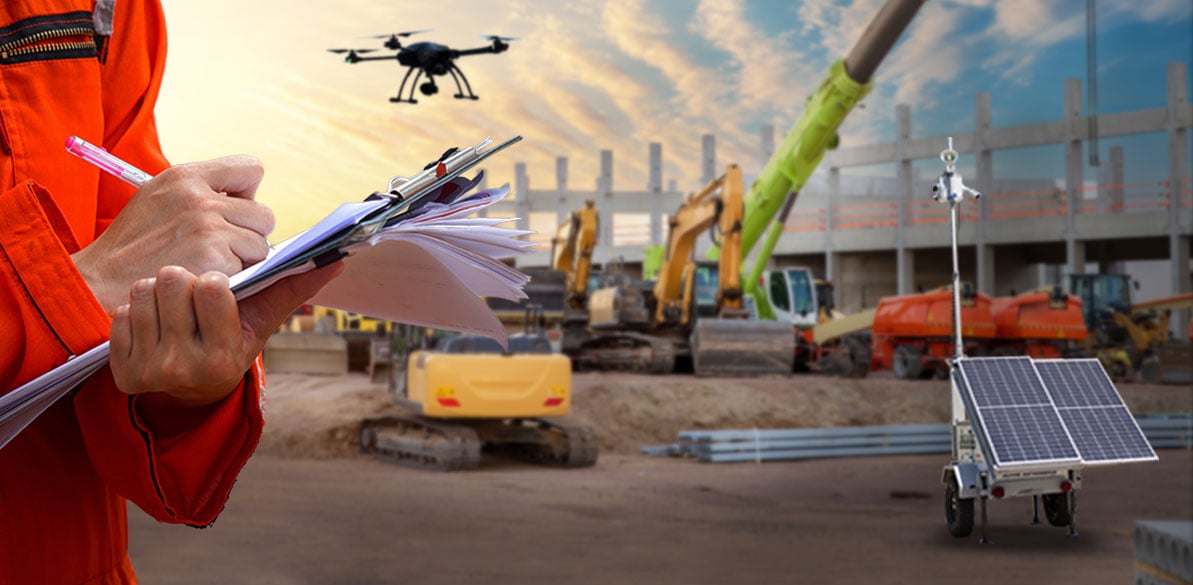
Titan's Virtual Security Guards provide a flexible way to monitor these environments without relying exclusively on personnel stationed throughout the property.
Perimeter Coverage and Active Deterrence
Titan positions Virtual Security Guards to provide coverage across the site's perimeter, with placement determined by the property's layout and security requirements. These systems combine high-definition surveillance with capabilities designed to identify and deter unauthorized activity.
Depending on the deployment, features include:
- Infrared or thermal cameras to support monitoring after dark
- Live audio talkdown so monitoring personnel can address suspicious individuals directly
- Flashing lights to warn trespassers that activity has been detected
- Backup power to help maintain operations during power interruptions
- Tamper-resistant wiring to reduce the risk of deliberate interference
These capabilities allow monitoring personnel to identify suspicious activity and take appropriate action rather than relying solely on recorded footage reviewed after an incident.
A live warning may be enough to deter someone attempting to enter the site. If the situation requires additional intervention, operators can coordinate with responding personnel or law enforcement.
Monitoring That Adapts as Construction Progresses
Security requirements can change significantly between excavation, structural work, and final completion. Equipment may move, new entrances may open, and previously visible areas may become obstructed.
Virtual Security Guards can be repositioned or supplemented as the site evolves, helping maintain coverage as the property's layout changes.
This adaptability is important for construction site security programs that need to protect valuable assets throughout the project rather than relying on a static surveillance plan established before work begins.
How Drone Security Adds Another Layer of Protection
Even a carefully planned perimeter surveillance system has limitations. Fixed cameras monitor designated areas, but construction sites may include remote corners, large equipment yards, uneven terrain, or locations that become difficult to see as buildings take shape.
Drone security helps address these limitations by providing an aerial perspective. When suspicious activity is detected, a drone can be dispatched to investigate an area that is outside the view of fixed cameras. From above, operators can assess conditions across a larger portion of the property, locate individuals or vehicles, and provide live video that supports an informed response.
For example, if someone enters a construction site and moves beyond perimeter camera coverage, a drone may be able to locate the individual and track their movements while monitoring personnel coordinate the next steps.
Drones can also support scheduled patrols of remote areas, equipment storage locations, and other vulnerable sections of a site.
Why Virtual Guards and Drones Work Better Together
Virtual Security Guards provide fixed-position surveillance, deterrence, and alert verification. Drones extend visibility beyond those fixed positions and help operators investigate activity across larger areas.
Together, they can create a more comprehensive security program that responds to the changing conditions of an active construction project.
This combination is part of Titan's blended security approach, which integrates different security resources according to the property's needs. The objective is to maintain effective coverage and response capabilities while making efficient use of the project's security budget.
Tier 1 Security Requires Ongoing Monitoring and Maintenance
Installing surveillance equipment is only the beginning of an effective construction security program.
- Cameras must remain operational.
- Connectivity needs to be reliable.
- Warning lights and speakers must function when an incident occurs.
A system that appears adequate during installation may fail to provide the required protection if equipment problems go undetected. Titan addresses these risks through ongoing monitoring and preventative system checks.
24/7 Monitoring by Trained Professionals
Titan's Security Operations Center operates 24 hours a day, 365 days a year, with trained personnel monitoring activity and coordinating incident response.
The center holds UL certification and Five Diamond recognition, and it earned a perfect score on its most recent UL certification audit. These credentials provide additional evidence of the operational standards supporting Titan's security services.
Learn more about the perfect score earned by Titan's Security Operations Center during its UL certification audit.
Weekly System Health Checks
Titan conducts weekly system health checks at its builder's risk sites. These inspections cover cameras, connectivity, lights, speakers, and other components necessary for effective operation.
Regular checks help identify problems before they compromise coverage, reducing the likelihood that a malfunction will go unnoticed until an incident occurs.
For contractors and project owners, this ongoing attention also helps demonstrate that the security program is being actively maintained throughout construction.
Why the Lowest Security Bid Can Become the Most Expensive
Construction budgets are closely managed, and security is one of many expenses competing for available funds. A lower-cost provider may appear attractive, particularly when its proposal includes cameras, monitoring, or other equipment that looks similar to a more comprehensive solution. However, the real cost of security should be evaluated against the financial consequences of a failure.
Consider a generator stolen from an active construction site. The immediate loss includes the equipment's replacement cost. But if a new generator has a lengthy lead time, the theft may also delay work that depends on it.
Those delays can affect subcontractors, increase labor expenses, and push back the scheduled turnover date. Depending on the construction contract, missed deadlines may also result in financial penalties.
A security failure could create additional concerns if the project was required to maintain particular protective measures under its builder's risk policy.
As Titan explains in its discussion of construction risk control and long-term costs, preventing losses can help protect project schedules and reduce financial exposure.The lowest bid may save money initially, but those savings can disappear quickly when inadequate protection contributes to a costly incident.
A stronger security program may require a greater investment, particularly when it includes active monitoring, reliable equipment, maintenance, and coordinated response. The relevant question is whether that investment provides the protection the project requires.
How Titan Delivers Tier 1 Security Through Speed, Quality, and Service
Titan's Tier 1 preferred-provider status reflects the standards it has been vetted to meet. Its day-to-day operations are built around three commitments.
- Speed: Suspicious activity needs to be identified, assessed, and addressed quickly. Titan combines active monitoring, Virtual Security Guards, and drone security to support rapid investigation and coordinated response.
- Quality: Reliable protection requires appropriate equipment, trained personnel, documented procedures, and ongoing maintenance. Titan's audits and weekly system checks reinforce its commitment to consistent security quality.
- Service: Construction teams need a security provider that understands their requirements, communicates effectively, and takes responsibility for keeping systems operational. Titan emphasizes responsive service and accountability throughout the engagement.
These commitments support a security program designed to meet applicable requirements from the beginning of the project and remain effective as construction progresses.
Protect Your Construction Project With Tier 1 Security
Construction projects face risks that can affect equipment, schedules, budgets, and insurance obligations. Meeting demanding security requirements calls for reliable technology, trained personnel, active monitoring, and a provider capable of maintaining protection throughout the project.
Titan Protection combines Tier 1 preferred-provider status with Virtual Security Guards, drone security, and a continuously staffed Security Operations Center to help construction teams protect their sites and reduce operational risk.
Find out how Titan can develop a construction security program tailored to your project's risks and builder's risk insurance requirements.
Explore Titan's Construction Site Security Solutions
Subscribe To Email Update
Posts by Topic
- Video Monitoring
- Drone Security
- Virtual Guard
- Construction Site Security
- Auto Dealership Security
- Blended Security
- News
- Press Release
- In The News
- Kansas City
- Commercial Property Security
- Parking Lot Security
- St Louis
- Events
- Farm Protection
- Farm Security
- St. Louis Security
- Cannabis Dispensary Security
- Critical Facility Security
- Hospital Security
- Insider
- Campus Security
- Data Center Security
- Solar Farm Security