The Right Security Partner Supports Every Phase of Multifamily Development
- Video Monitoring,
- Construction Site Security,
- Virtual Guard
Developers should choose a multifamily security partner that can support a property from active construction through lease-up, resident move-ins, and stabilized operations. As a project evolves, security requirements change just as quickly. Equipment and materials eventually give way to leasing offices, model units, new residents, and community amenities. The right partner adjusts coverage along the way without requiring a complete change in strategy...or a new vendor.
That continuity becomes increasingly important as projects become larger and portfolios span multiple markets. Construction teams, property managers, and asset managers all have different priorities, but they benefit from a security program built around consistent reporting, communication, and operational standards.
Choosing separate providers for construction, lease-up, and ongoing operations often creates unnecessary handoffs. Reporting formats change, procedures must be rewritten, and property teams spend valuable time bringing new vendors up to speed. A single security partner helps reduce that friction by maintaining one coordinated approach throughout the property's lifecycle.
The sections below outline how multifamily security needs change over time, what developers should look for in a long-term security partner, and how a flexible combination of on-site personnel, monitoring, patrols, and technologies such as drone security can support every stage of development.
How Do Security Needs Change from Construction Through Occupancy?
Security priorities shift throughout the life of a multifamily development. A strategy that works during site preparation won't necessarily meet the needs of a fully occupied apartment community.
Understanding how those risks evolve allows developers to build a security program that adapts alongside the property.
Active Construction
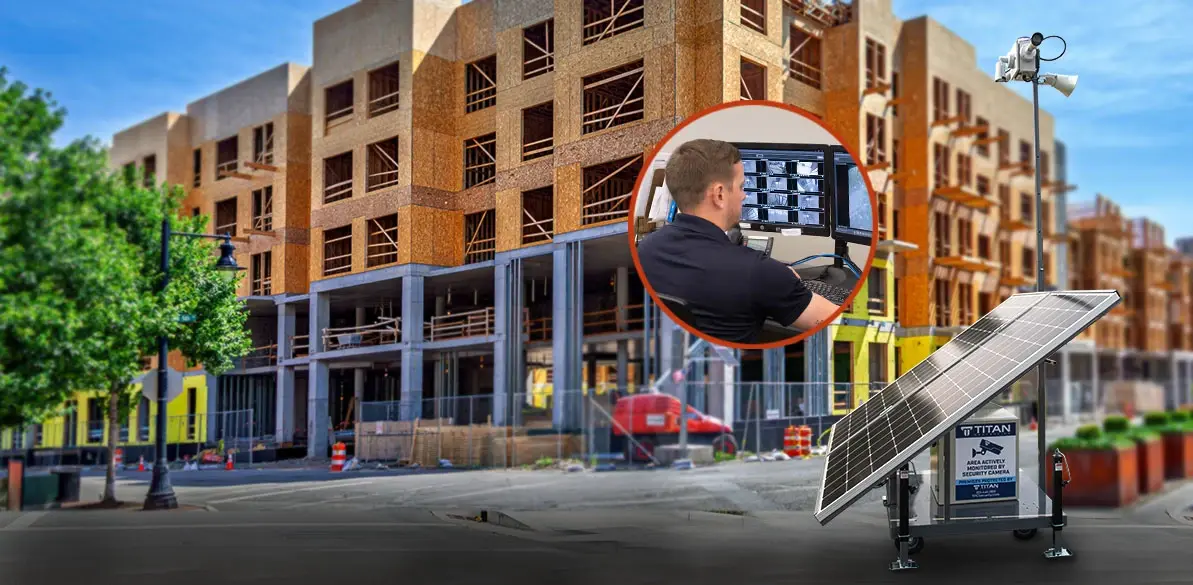
During construction, the focus is protecting equipment, building materials, and the jobsite itself.
Contractors, subcontractors, deliveries, and heavy equipment create constant activity during the day, while evenings and weekends often leave valuable assets unattended. Temporary fencing, incomplete buildings, and changing site layouts can also create opportunities for unauthorized access.
Security during this phase often includes:
- Perimeter monitoring
- Construction site patrols
- Equipment and material protection
- Drone security for large or changing areas of the site
- Temporary security coverage
- Clear incident reporting for project leadership
Because construction conditions change frequently, security resources should be flexible enough to move with the project. Drone security can provide additional visibility as perimeters, equipment areas, and active work zones shift throughout construction.
Pre-opening and Turnover
As construction nears completion, the property moves into a transitional period marked by the opening of leasing offices and model units, continued punch-list work, and the arrival of furniture, appliances, and building finishes. At the same time, access becomes more complex as construction crews, leasing staff, maintenance teams, contractors, and visitors all need entry to different parts of the property.
Security priorities shift toward:
- Protecting completed buildings
- Managing vendor and visitor access
- Supporting leasing office operations
- Coordinating between construction and property management teams
Drone security can also provide additional visibility across large developments during this transitional period, particularly in parking areas, vacant sections of the property, and locations where construction activity is winding down but permanent operations have not yet begun.
Lease-Up and Resident Move-Ins
Lease-up brings a new mix of security considerations as residents begin moving in, deliveries increase, tours continue, and amenities open for regular use. Parking areas and common spaces become busier, more people need access to the property, and the overall flow of activity becomes harder to manage.
During this phase, a visible security presence can help support residents, manage increased traffic, and respond quickly when issues arise.
Stabilized Occupancy
Once the community reaches stabilized occupancy, security transitions from temporary project support to long-term property operations.
Attention shifts toward:
- Building entrances
- Parking areas
- Common spaces
- Amenities
- After-hours activity
- Resident safety
Coverage often becomes more targeted, balancing visible security with efficient monitoring and response while maintaining consistent reporting for property management.
Security Throughout the Property Lifecycle
|
Development Phase |
Primary Risks |
Appropriate Coverage |
|
Active Construction |
Equipment theft, material theft, trespassing, vandalism |
Security officers, patrols, temporary coverage, Virtual Security Guard, drone security |
|
Pre-Opening & Turnover |
Vendor access, completed buildings, model units, deliveries |
Security officers, access management, patrols, Virtual Security Guard, drone security |
|
Lease-Up & Move-Ins |
Increased visitors, parking activity, deliveries, resident move-ins |
Security officers, patrols, Virtual Security Guard, drone security as needed, temporary reinforcement |
|
Stabilized Occupancy |
Resident safety, parking lots, amenities, after-hours activity |
Patrols, Virtual Security Guard, targeted officer coverage, drone security where appropriate |
Why Should Developers Standardize Multifamily Security Across Properties?
Developers with multiple communities often face another challenge: maintaining consistency from one property to the next.
Standardization does not mean assigning identical staffing levels or using the same security plan everywhere. Every property has its own layout, operating environment, and risk profile.
Instead, developers should establish consistent operational standards while allowing each property's coverage plan to reflect local conditions.
Elements that typically remain consistent include:
- Incident classifications
- Reporting formats
- Escalation procedures
- Communication protocols
- Post orders
- Performance expectations
- Construction-to-operations transition procedures
This approach provides several advantages:
- Regional and corporate leadership can compare reporting across communities using the same framework.
- New developments can be mobilized more efficiently because security procedures have already been established.
- Property managers spend less time developing new programs for every site, while executives gain better visibility into security performance across the portfolio.
A standardized framework also simplifies vendor management, particularly for developers operating in multiple states, without sacrificing flexibility where local conditions require different levels of coverage.
What Should Developers Seek in a Multifamily Security Partner?
Choosing a multifamily security provider requires thinking beyond the property's immediate needs. The right partner should be able to support the development from construction through lease-up and stabilized operations while adapting services as conditions change.
Full-Lifecycle Capabilities
Security services should transition smoothly from construction through lease-up and into stabilized operations.
Developers should ask whether a provider can adjust coverage without requiring a complete change in vendors every time the property enters a new phase.
Flexible Mobilization
Construction delays, grand openings, resident move-ins, and unexpected incidents all create temporary security needs.
A strong security partner should be able to increase, reduce, or reposition coverage as conditions change while providing clear mobilization and demobilization procedures.
Portfolio-Level Management
Managing several developments becomes easier when there is one point of contact and consistent reporting across every property.
Developers should look for providers that offer centralized oversight while still delivering site-specific information that property teams can act on locally.
Geographic Coverage
National or regional coverage should be backed by clear operational capabilities.
Developers should understand how a provider manages licensing, staffing, supervision, and quality control across different markets rather than relying on broad claims of nationwide service.
Monitoring and Response
An effective security program should clearly define how activity is detected, verified, escalated, and documented.
Developers should also understand how monitoring works alongside patrol services, on-site officers, Virtual Security Guard, drone security, and rapid response resources where available. When these capabilities are coordinated, information gathered through cameras or aerial visibility can help teams verify activity and determine the appropriate response.
Construction-to-Property Management Handoff
One of the most overlooked parts of multifamily security is the transition from construction to ongoing operations.
Developers should ask:
- Who updates post orders?
- How are access procedures revised?
- How does incident history transfer to the property management team?
- How does the security plan evolve as occupancy increases?
Planning these transitions early helps eliminate unnecessary disruptions later.
How Should Security Services Change During Development and Lease-Up?
The most effective multifamily security programs combine personnel and technology to match each phase of development rather than relying on the same level of coverage throughout the project.
Security Officers
On-site officers provide a visible presence during active construction, leasing operations, resident move-ins, and other periods where access management or visitor interaction is important.
Rather than recommending continuous staffing for every property, Officer coverage can be adjusted to match operational needs and higher-activity periods.
Security Patrol Services
Patrol services provide flexible coverage for parking areas, perimeter roads, vacant buildings, model units, and common areas. Schedules can be adjusted as occupancy changes, allowing developers to increase coverage during periods of higher activity and scale it back once the community stabilizes.
Virtual Security Guard
Virtual Security Guard provides continuous monitoring of entrances, parking lots, equipment areas, leasing offices, and other camera-covered locations.
When suspicious activity occurs, trained operators verify the situation, document the event, and initiate the appropriate escalation procedures.
Because monitoring can be managed across multiple locations, Virtual Security Guard also helps create greater consistency for geographically distributed portfolios.
Drone Security
Large multifamily developments can be difficult to cover efficiently during construction and other transitional phases, particularly when buildings, parking areas, equipment, and active work zones are spread across the property.
Drone security provides an aerial view that can help teams assess large or difficult-to-reach areas quickly. During construction, drones can provide visibility across changing perimeters, equipment areas, and sections of the site that may be difficult to monitor from fixed locations. As the property moves toward opening and lease-up, coverage can shift to parking areas, vacant sections of the development, and other locations where additional visibility is needed.
When integrated with Titan's broader security program, drone security can also support incident verification and help monitoring teams determine what resources should be deployed in response.
Temporary Coverage and Quick Response Teams
Unexpected situations are part of every development project.
Construction delays, grand openings, resident events, staffing gaps, or security incidents may require additional coverage on short notice.
Where available, Titan's Quick Response Team (QRT) can provide temporary armed or unarmed Officers, foot or vehicle patrols, alarm response, and short-term reinforcement that integrates with the property's existing security plan rather than operating independently.
How Can Developers Create One Standard Without Overlooking Local Conditions?
For developers managing multiple communities, consistency is important. However, consistency doesn't mean every property should have the same security plan.
A newly constructed apartment community in a suburban market faces different challenges than a high-rise in a busy urban neighborhood. Construction schedules, occupancy rates, property layouts, and local activity all influence how security resources should be deployed.
The most effective approach is to establish a portfolio-wide security framework while allowing each property to tailor coverage to its specific needs.
Portfolio-Wide Standards
Certain elements should remain consistent across every development, regardless of location.
These typically include:
- Incident reporting standards
- Escalation procedures
- Communication protocols
- Minimum security expectations for each development phase
- Vendor reporting requirements
- Performance review processes
Maintaining these standards creates consistency for developers, property managers, and executive teams while making it easier to evaluate performance across an entire portfolio.
Property-Specific Security Plans
Within that broader framework, each property should have a security plan based on its individual characteristics.
Factors to consider include:
- Site layout
- Current stage of construction
- Occupancy levels
- Local crime patterns
- Available lighting and camera infrastructure
- State and local regulations
- Proximity of patrol or response resources
Those conditions can also help determine where drone security provides value. A large development with an active construction area may benefit from regular aerial coverage, while another property may use drones selectively for specific areas or situations. This gives portfolio leaders another way to maintain common security standards while tailoring resources to each property.
Why Titan Protection Fits a Phased Multifamily Security Strategy
Multifamily developments rarely remain in the same phase for long. Construction progresses, leasing activity increases, residents move in, and operational priorities continue to evolve.
Titan Protection helps developers manage those transitions with a coordinated security program that can adapt as each property changes.
Titan brings security officers, patrols, Virtual Security Guard, drone security, temporary coverage,
Rather than treating security officers, patrols, Virtual Security Guard, and temporary coverage and response resources together within a coordinated strategy that can support every stage of development..
As projects move from construction into lease-up, coverage can be adjusted to reflect changing conditions without requiring developers to rebuild their security program or transition to a different provider.
Titan's 24/7 Security Operations Center provides centralized monitoring, incident verification, communication, and escalation procedures that help maintain consistency across multiple properties. For developers managing regional portfolios, this centralized oversight simplifies reporting while allowing each community to receive coverage based on its individual needs.
Where available, Titan's Quick Response Team (QRT) can provide temporary reinforcement during construction delays, grand openings, staffing shortages, special events, or other situations requiring additional support. Because QRT integrates with the property's existing security plan, temporary coverage can be added without disrupting established procedures.
This coordinated approach gives developers one security partner capable of supporting the property from groundbreaking through stabilized occupancy.
Build a Lease-Up Security Plan
Security decisions made during construction often influence how smoothly a property transitions into lease-up and long-term operations.
Selecting different providers for each phase can create unnecessary handoffs, inconsistent reporting, and operational gaps just as activity begins increasing. Working with one security partner throughout the development process helps maintain continuity while allowing coverage to evolve as the property changes.
By planning those transition points before construction is complete, developers can create a security program that brings together personnel, monitoring, patrols, drone security, and responsive support as the property moves from construction through stabilized occupancy.
Build a lease-up security plan. Contact Titan Protection to discuss a phased security strategy that adapts to every stage of your multifamily development.
Frequently Asked Questions about Multifamily Development Security
When should developers select a security partner for a new multifamily project?
Ideally, developers should engage a security partner before construction begins. Early planning allows security procedures, reporting standards, and coverage strategies to be incorporated into each phase of development rather than added later as needs arise.
How should security coverage change during multifamily lease-up?
Lease-up typically brings more visitors, deliveries, prospective residents, and move-in activity. Security coverage often shifts toward access management, visible patrols, parking area monitoring, and support for leasing operations while maintaining protection for completed buildings and amenities.
Can one security provider support construction and long-term property operations?
Yes. A provider with experience across the full property lifecycle can adjust security services as construction progresses, leasing activity increases, and the community reaches stabilized occupancy. This reduces the need for vendor transitions and helps maintain consistent reporting and operating procedures.
How can developers standardize security across properties in multiple states?
Developers should establish portfolio-wide standards for reporting, communication, escalation procedures, and performance expectations while allowing individual properties to tailor staffing and security services based on local conditions, occupancy levels, and site layouts.
What should be included in a multifamily security RFP?
A security RFP should address lifecycle capabilities, mobilization procedures, reporting requirements, communication protocols, staffing flexibility, monitoring capabilities, escalation processes, geographic coverage, and the provider's ability to support both construction and long-term property operations.
When is temporary security coverage appropriate during development?
Temporary coverage is often appropriate during construction delays, grand openings, lease-up events, staffing shortages, unexpected incidents, special events, or any period when additional security resources are needed for a limited time.
How can drone security support multifamily developments?
Drone security can provide additional visibility across large or changing properties, particularly during construction, pre-opening, and lease-up. Drones can help assess perimeters, parking areas, equipment zones, vacant sections, and other locations that may be difficult to monitor from fixed positions. When integrated with monitoring and response services, aerial visibility can also help security teams evaluate activity and determine the appropriate response.
Subscribe To Email Update
Posts by Topic
- Video Monitoring
- Drone Security
- Virtual Guard
- Construction Site Security
- Auto Dealership Security
- Blended Security
- News
- Press Release
- In The News
- Commercial Property Security
- Kansas City
- Parking Lot Security
- Events
- Farm Protection
- Farm Security
- St Louis
- St. Louis Security
- Cannabis Dispensary Security
- Critical Facility Security
- Hospital Security
- Insider
- Campus Security
- Data Center Security
- Solar Farm Security