The Drone Is the Easy Part: How Titan Takes on the Operational Burden of Drone Security
- Drone Security
Want to buy a drone? That's easy. But building a reliable commercial drone security program around it? That's considerably more complicated.
Operating a program on your own means taking responsibility for FAA requirements and airspace authorizations, pilot staffing and training, flight planning, aircraft maintenance, monitoring, documentation, and ongoing compliance. And because security threats don't follow a convenient schedule, the infrastructure supporting those operations has to be ready around the clock.
Titan Protection's managed drone security model shifts those responsibilities from the client to Titan.
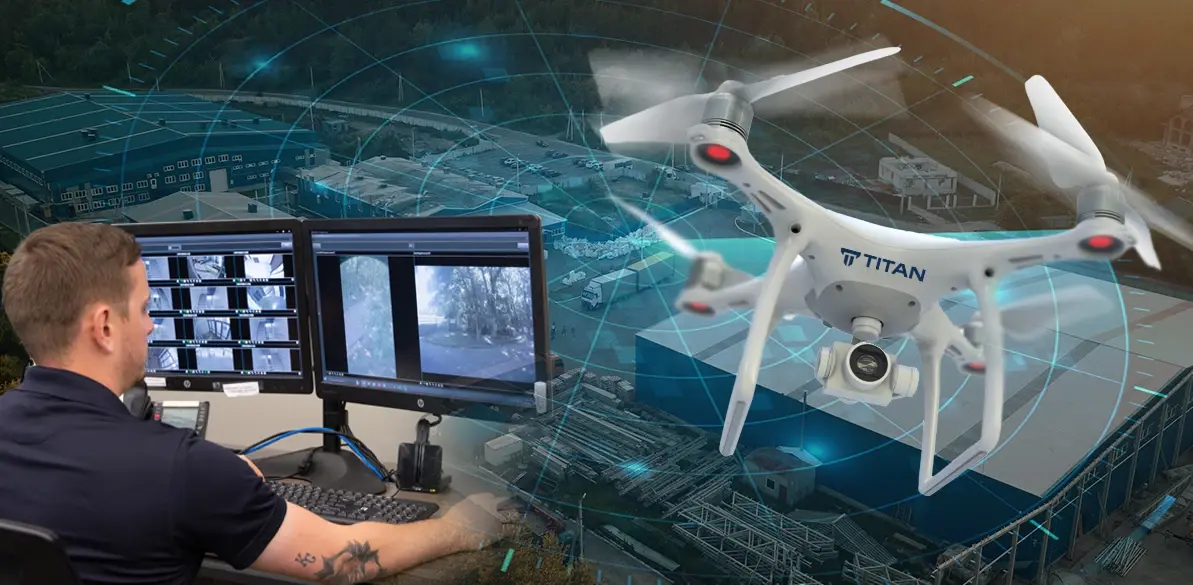
Behind every Titan drone is a team of FAA-certified remote pilots and security professionals working through a 24/7 Security Operations Center (SOC). Titan handles the people, infrastructure, regulatory requirements, and day-to-day operations needed to turn aerial technology into a functioning security program.
As Titan puts it: The drone is the easy part. What matters is everything standing behind it.
What Does It Take to Operate an In-House Drone Security Program?
Launching an internal drone program involves much more than purchasing aircraft and docking equipment.
Commercial drone programs must account for FAA regulations and applicable flight requirements. They also require qualified pilots, procedures for training and onboarding, and sufficient staffing to maintain the necessary coverage. Aircraft have to be inspected and maintained, flights managed and documented, and policies kept current as regulations and operational requirements evolve.
Then there's the security operation itself, which requires someone to:
- Receive alerts
- Assess what the drone is seeing
- Determine whether an event requires intervention
- Coordinate with security officers or law enforcement when appropriate.
Providing that capability 24/7 requires staffing and infrastructure of its own. Taken together, these responsibilities can create a significant operational burden for an organization whose core business has nothing to do with operating drones.
FAA Compliance Requires Time and Expertise
Regulatory compliance is one of the biggest barriers to building a commercial drone program.
Drone operators may need to address FAA Part 107 requirements, airspace restrictions, flight planning, Beyond Visual Line of Sight (BVLOS) operations, and other requirements depending on how and where drones will be used.
BVLOS capability is particularly important for security applications. It allows drones to operate beyond the remote pilot's direct visual line of sight, making it possible to cover larger properties and respond to activity without requiring a pilot to physically follow the aircraft.
Obtaining the necessary approvals can require substantial time, expertise, and expense. Organizations pursuing these capabilities themselves also assume responsibility for maintaining compliance as their operations grow or requirements change.
Titan has already invested in the regulatory infrastructure required to support its drone security operations. Titan's nationwide FAA BVLOS waiver allows its team to support eligible deployments without requiring each client to build that regulatory capability from scratch.
For the client, that can significantly shorten the path between deciding to deploy Drone and putting a program into operation.
Staffing a Drone Program Creates Another Management Responsibility
Technology still needs qualified people behind it.
Titan's remote pilots are FAA Part 107 certified and trained for security operations. With a managed service, clients don't have to recruit pilots, verify qualifications, develop training programs, manage schedules, handle turnover, or maintain sufficient staffing themselves.
Those responsibilities become particularly significant when the goal is continuous security coverage.
An organization can't simply train one employee to fly a drone and consider the problem solved. Vacation, illness, turnover, nights, weekends, and other staffing realities still have to be addressed. Someone also has to manage onboarding, performance, documentation, and continuing training.
Titan absorbs those responsibilities as part of the service, giving clients access to trained personnel without adding another specialized team to their own organization.
Aircraft Require Ongoing Management, Too
The operational burden continues after the drone is in the air.
Aircraft and supporting equipment require inspection, maintenance, software management, charging, and repair. Flight routes and geofenced areas have to reflect the property where the system operates. As the site's security needs change, patrol and response plans may need to change with them.
Titan handles those responsibilities as part of its managed model.
Before deployment, Titan works with the client to map the property's perimeter, identify higher-risk areas, and develop patrol and response plans around the site's specific conditions and existing security systems.
The result is a drone security program designed around the property rather than a piece of technology the client's security team is left to implement and manage.
A 24/7 SOC Turns Drone Footage Into Security Intelligence
Continuous aerial visibility has limited value if no one is available to act on what the drone detects.
Live footage from Titan drones feeds into Titan's Five-Diamond, UL-certified 24/7 monitoring center, where trained security personnel and FAA-licensed pilots oversee operations.
When potential threats are identified, Titan's operators can evaluate what is happening, take manual control of the drone when needed, track activity, and coordinate an appropriate response with on-site security personnel or law enforcement.
The close relationship between Titan's SOC and Air Ops team also helps reduce delays between detection and action. Drone operators aren't functioning as a separate vendor that needs to be contacted after an alarm occurs. The teams operate as part of the same security infrastructure.
That integration is what turns the drone from a flying camera into an active security resource.
Titan Handles the Infrastructure Investment
Building an internal drone security operation also requires a financial commitment before the first security mission takes place.
The investment can include aircraft, docking stations, supporting technology, regulatory and compliance work, pilot training, insurance, maintenance, monitoring infrastructure, and the personnel required to operate it all.
Titan's drone-as-a-service model shifts those responsibilities into a managed service with predictable monthly costs. Clients can deploy the technology without having to make the same upfront investment in equipment and build the supporting operational infrastructure internally.
This model can also make it easier to scale. As an organization's security requirements expand, it doesn't have to repeat the process of building a new operating capability from the ground up.
The Operational Burden Doesn't End After Deployment
A successful drone program needs ongoing attention:
- Pilots come and go.
- Training needs to stay current.
- Aircraft require maintenance.
- Documentation has to be maintained.
- Regulations and FAA requirements can evolve.
- Security conditions at the property itself may change.
For an internally managed program, each of those becomes another responsibility for the organization's security or operations team.
With Titan, ongoing management remains part of the service. The Air Ops team manages flight operations and aircraft requirements, while the SOC provides continuous monitoring and coordinates response.
Clients get the security capability without inheriting the administrative infrastructure needed to sustain it.
Drone Security Works Best as Part of a Blended Security Program
Titan's managed model also allows drones to work alongside other security resources already protecting the property.
A drone can patrol large areas and respond to activity quickly, while Titan's SOC provides continuous monitoring and trained personnel evaluate what the technology detects. When an incident requires a physical response, security officers, mobile personnel, or law enforcement can take over on the ground.
Existing security systems don't necessarily have to be replaced. Drone security can extend their reach by providing aerial visibility across areas that may be difficult or inefficient to cover continuously with personnel or fixed cameras.
The mix can be tailored to the property's size, risk profile, existing security program, and budget.
From a Drone Purchase to a Fully Managed Security Capability
Organizations considering drone security should look beyond the aircraft when comparing their options. The larger question is who will handle the licensing, regulatory requirements, staffing, training, flight operations, maintenance, monitoring, documentation, and response coordination required to keep the program working.
Building that capability internally takes time, capital, and ongoing management attention. Titan Protection has already built the infrastructure behind the drone.
Its managed drone security service combines FAA-certified remote pilots, nationwide BVLOS capabilities, 24/7 SOC monitoring, aircraft management, and coordinated security response in one program.
Titan handles the operational burden so your team can focus on the security outcome.
Contact Titan Protection to learn how a managed drone security program can be deployed at your property.
Subscribe To Email Update
Posts by Topic
- Video Monitoring
- Drone Security
- Virtual Guard
- Construction Site Security
- Auto Dealership Security
- Blended Security
- News
- Press Release
- In The News
- Commercial Property Security
- Kansas City
- Parking Lot Security
- Events
- Farm Protection
- Farm Security
- St Louis
- St. Louis Security
- Cannabis Dispensary Security
- Critical Facility Security
- Hospital Security
- Insider
- Campus Security
- Data Center Security
- Solar Farm Security